
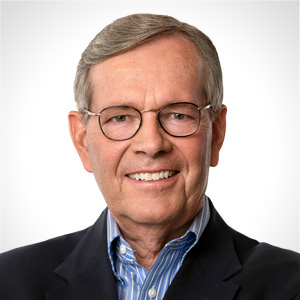
Michael “Mike” Leavitt is the founder of Leavitt Partners where he helps clients navigate the future as they transition to new and better models of care.
In 1984, he became chief executive of The Leavitt Group, a family business that is now the nation’s second largest, privately held insurance brokerage.
In 1993, he was elected governor of Utah and served three terms from 1993-2003. In 2003, he joined the Cabinet of President George W. Bush, serving in two positions: first as administrator of the Environmental Protection Agency (2003-2005) and then as secretary of Health and Human Services (HHS) from 2005-2009. At HHS, he administered a $750 billion budget, which comprised nearly 25 percent of the entire federal budget with 67,000 employees.
He led the implementation of the Medicare Part D Prescription Drug Program. The task required the design, systematization, and implementation of a plan to provide 43 million seniors with a new prescription drug benefit. By the end of the first year, enrollments exceeded projections, prices were lower than projected, and seniors expressed high levels of satisfaction.
Governor Leavitt’s strategic ability can be seen in his redesign of the nation’s system of quality and safety standards for imported goods. In the spring of 2006, President Bush assigned him to lead a government wide response. Within months, he led a major strategic shift in U.S. policy on import regulation and trade.
A pattern of innovation runs throughout Governor Leavitt’s career. When he was elected governor, Utah’s major freeway system was dangerously inadequate. Taking what some thought was a significant political and financial risk, he initiated a design-build system, creating cost and quality incentives between the state and state contractors. The project was finished in half the originally projected time and well under budget.
Governor Leavitt is, at heart, an entrepreneur. As governor, he organized a group of his colleagues to form Western Governors University (WGU). At WGU, degrees are earned based on competency rather than credit hours. WGU now has more than 60,000 students who reside in each of the 50 states and several foreign countries. Enrollment is growing at 35 percent a year. In November 2008, TIME magazine named WGU “the best relatively cheap university you’ve never heard of.”
Collaborator is a word that comes up repeatedly when one examines Governor Leavitt’s background. His skill led his colleague governors to elect him as chairman of the National Governors Association, the Republican Governors Association, and Western Governors’ Association. His book—Finding Allies, Building Alliances—was released in September 2013 by Jossey-Bass Publishers and chronicles his expertise and passion for collaboration.
Governor Leavitt is a seasoned diplomat, leading U.S. delegations to more than 50 countries. He conducted negotiations on matters related to health, the environment, and trade. At the conclusion of his service, the Chinese government awarded him the China Public Health Award – the first time this award was ever given to a foreign government official.
He earned a bachelor’s degree in business from Southern Utah University while working in the insurance industry.